
Thailand is a southeast Asian, predominantly Buddhist kingdom almost equidistant between India and China. For centuries known by outsiders as Siam, Thailand has been something of a southeast Asian migratory, cultural and religious cross- roads. With an area of some 510,000 square kilometers and a population of some 57 million , Thailand is approximately the same size as France. Thailand shares borders with Myanmar to the west and north, Laos to the north-east, Kampuchea to the west, and Malaysia to the south. Geographically speaking , Thailand is divided into six major regions : the mountainous north where elephants work forests and winter temperatures are sufficiently cool to permit cultivation of temperate fruits such as strawberries and peaches; the sprawling north-east plateau, largely bordered by the Mekong River, where the world’s oldest Bronze Age civilization flourished some 5,000 years ago; the central plain , one of the world’s most fertile rice and fruit growing areas; the eastern coastal plain , where fine sandy beaches support the growth of summer resorts; western mountains and valleys, suitable for the development of hydro-electric power; and the peninsular south where arresting scenic beauty complements economically vital tin mining, rubber cultivation and fishing.
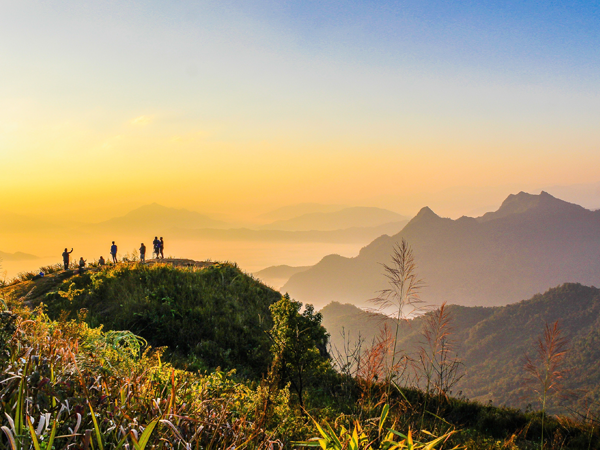
Thailand enjoys a tropical climate with 3 distinct seasons – summer from March through May, rainy with plenty of sunshine from June to September and cool from October through February. The average annual temperature is 28 iC (83 iF), ranging, in Bangkok, for example , from 30 iC in April to 25 iC in December.
Time
Time in Thailand is 7 hours ahead of Greenwich Mean Time (GMT+7).

Archaeological discoveries around the north-east hamlet of Ban chiang suggest that the world’s oldest Bronze Age civilization was flourishing in Thailand some 5600 years ago. Successive waves of immigrants, including Mons, Khmers and thais, gradually entered the land mass now known as Thailand, most slowly traveling along fertile river valleys from southern china. By the 11th and 12th centuries , Khmers ruled much of the area from Angkor. By the early 1200s, Thais had established small northern city states in Lanna, Phayao and Sukhothai. In 1238, two thai chieftains rebelled against Khmer suzerainty and established the first truly independent thai kingdom in Sukhothai(literally, ‘Dawn of Happiness’).
Sukhothai saw the Thai’s gradual expansion throughout the entire Chao Phraya River Basin , the establishment of Theravada Budhism as the paramount Thai religion, the creation of the Thai alphabet and the first expression of nscent Thai art forms, including painting , sculpture, architecture and literature. Sukhothai declined during the 1300s and eventually became a vassal state of Ayutthaya, a dynamic young kingdom further south in the Chao Phraya River Valley. Founded in 1350, Ayuthaya remained the Thai Capital until 1767 when it was destroyed by Burmese invaders. During Ayutthaya’s 417 years as the capital , under the rule of 33 kings , the Thais brought their distinctive culture to full fruition, totally rid their lands of Khmer presence and fostered contact with Arabian , Indian, Chinese, Japanese, and European powers.
Ayutthaya’s destruction was as severe a blow to the Thai’s as the loss of Paris or London would have been to the French or English. However, a Thai revival occurred within a few months and the Burmese were expelled by King Taksin who later made Thon Buri his capital. In 1782, the first king of the present Chakri dynasty, Rama I , established his new capital on the site of a riverside hamlet called Bangkok (Village of Wild Plums). Two Chakri monarchs, Mongkut(Rama IV) who reigned between 1851 and 1868, and his son Chulalongkorn (Rama V, 1868-1910) saved Thailand from western colonization through adroit diplomacy and selective modernization. Today, Thailand is a constitutional monarchy, since 1932, Thai kings including the present monarch, H.M.King Bhumipol Adulyadej have exercised their legislative powers through a national assembly, their executive powers through a cabinet headed by a prime minister , and their judicial powers through the law courts.
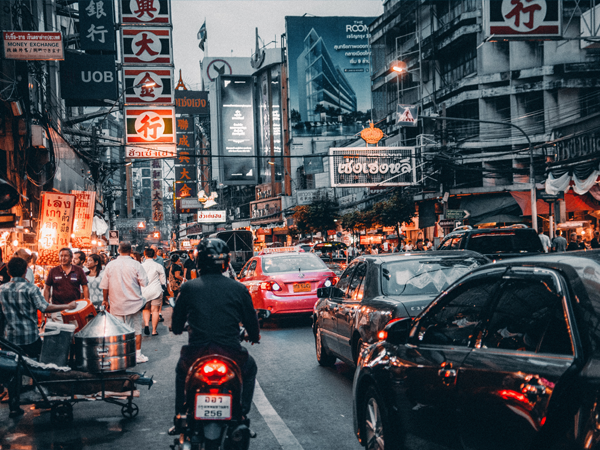
Throughout her long history, Thailand has gently absorbed immigrants. Many where skilled as writers, painters, sculptors, dancers, musicians and architects, and helped enrich indigenous culture. People inhabiting Thailand today share rich ethnic diversity – mainly Thai, Mon, Khmer, Laotian, Chinese, Malay, Persian and Indian Stock – with the result that there is no typically Thai physiognomy or physique. There are petite Thais, statuesque Thais, round -faced Thais, dark-skinned Thais and light skinned Thais. Some 80% of all Thais are connected in some way with agriculture which, in varying degrees, influences and is influenced by the religious ceremonies and festivals that help make Thailand such a distinctive country.
Spoken and written Thai remain largely incomprehensible to the casual visitor. However, English is widely understood, particularly in Bangkok where it is almost the major commercial language. English and other European languages are spoken in most hotels, shops and restaurants, in major tourist destinations, and Thai-English road and street signs are found nation wide.
His Majesty King Bhumibol Adulyadej is the ninth king of the Chakri dynasty. Born in December 1927, in Cambridge, Massachusetts USA, where his father. Prince Mahidol of Songkhla was studying medicine at Harvard University, H.M.King Bhumibol ascended the throne in 1946 and is already the longest reigning Thai monarch. As a constitutional monarch, he maintains neutrality in times of crisis.
Thai people have a deep and traditional reverence for the Royal Family. To a very large degree, H.M.King Bhumibol’s popularity mirrors his deep interest in his people’s welfare. He concerns himself intimately with every aspect of Thai life. He and his wife, H.M. Queen Sirikit devote much of their time to inspect and improve the welfare of the people.
The Thai unit of currency is the Baht which is worth a little less than 4 US cents.
One US dollar = approximately 40 Baht.
The Baht is divided into 100 Satang. “Copper” coins are valued at 25 and 50 satang.”Silver “ coins are in denominations of 1,2 and 5 Baht. A 10 baht coin is composed of both “silver” and c”copper”. Banknotes are valued at 10 baht(brown),20Baht(green),50 Baht(blue), 100 Baht(red), 500 Baht(purple) and 1,000 Baht(khaki).
Travel Tips
Tipping is not a usual practice in Thailand although it is becoming more common. Most hotels and restaurants add a 10% service charge to the bill. Taxi drivers do not require a tip, but the gesture is appreciated. It is customary to tip porters and hotel personnel who have given good personal service. A 10%-15% tip is appreciated in restaurants, particularly where service charge is waived.
Buyer Beware
The Tourism Authority of Thailand receives over 1,000 complaints a year about fake jewelry purchases. To avoid being a statistic , you must stay alert to the warning signs of a swindle at work. Heeding our warning could help you stave off unpleasant surprises and make your vacation what it should be – full of sparkle.
What To Buy
Thai silks , Cottons, nylon ware, silverware, bronzeware, pottery and celadon, pewter ware, precious stones and finished jewelry, and a dazzling range of folk handicrafts make memorable gifts and souvenirs; international standard readymade sports and leisurewear is inexpensive; and quality tailors and dressmakers offer reliable 24-hour services in Bangkok and major tourism destinations.
Where to Shop
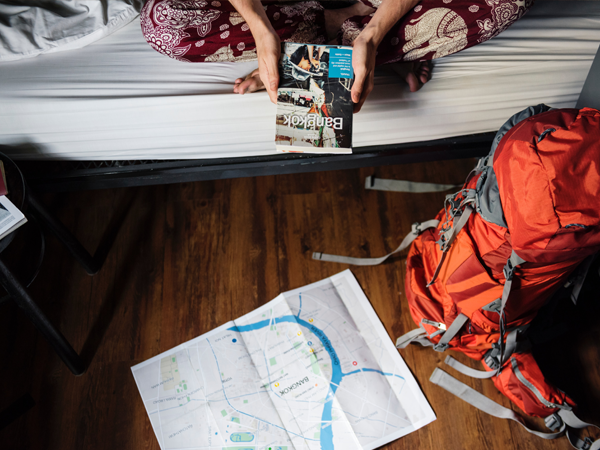
Thailand and Bangkok have developed into one of the best and most popular shopping locations in Asia , and with good reason. Prices are low, quality generally high and the range and variety is pretty amazing – silks, gemstones, tailor-made clothes and traditional handicrafts are all highlights of Bangkok shopping. Most shops seem to be open 10.00 am to 10.00 pm everyday of the week, and night markets carry on even after this time – all very convenient in being able to go shopping at basically any time you want. Buying a shopping map is very useful in order to get the most out of shopping in Bangkok.
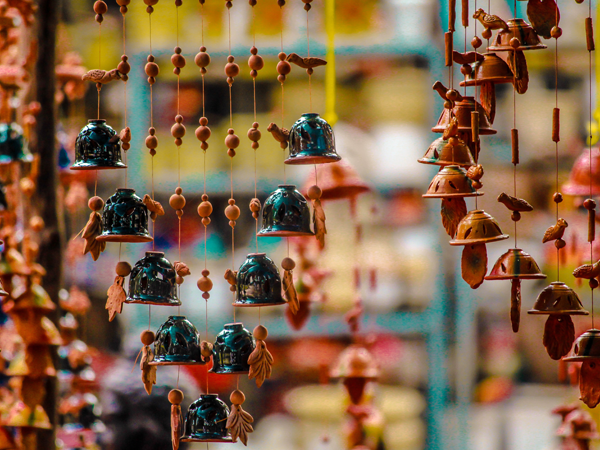
Patpong night market is very popular with tourists, but there’s no real good reason why. It’s got the same combination of souvenirs, fake brand name items and cheap clothes as in any tourist area in the city, but prices are way over the going rate. Bargaining very hard is essential to get a good deal and the touts for the go-go bars that Patpong is most famous for are persistent, annoying and can be aggressive. Patpong is between Silom and Surawong roads, and any taxi driver will know it.
Pratunam market is situated by the intersection of Ratchaprarop and Phetburi (Phetchaburi) roads, very near to the Amari Watergate hotel. This is notable as perhaps the best place in Bangkok to buy cheap clothes, fabrics and textiles – wholesalers and exporters buy here, as well as individual consumers. The market is not on the main road, look for the entrances that lead to it behind the shops.
Banglamphu market extends over Phra Surnen road, Chakrapong road and others nearby. Despite it’s proximity to tourist Khao San road, this is still mainly a market frequented by locals to buy clothes. house- hold accessories etc...There’s a separate market on Khao San road itself, which sells anything the foreign backpacker could need including backpacks, stereos, pirate CD’s, books, clothes, traveling accessories etc...
Narrow Sampeng Lane (also known as Soi Wanit) in Chinatown is an interesting place to wander down, and has a colorful history of murders, drugs gang wars and prostitution. Nowadays, it’s rather less dangerous as a primarily wholesale market, though you’re not likely to find much that you want to buy - on sale are fabrics, textiles, preserved food, household and kitchen accessories, spices, cheap toys etc...
Pahurat cloth market, in ‘Little India’ next to Chinatown. It’s basically yet another wholesale market for textiles, and there’s a wide selection of all sorts of fabrics, sarongs, textiles and clothes available. The market has mainly clothes, among them a wide selection of from all over Asia.
Chatuchak Weekend Market Though there are many markets throughout Bangkok, Chatuchak Weekend Market is still pretty much the undisputed king of them all. The scale ofit is pretty unbelievable - it covers an area of 70 rai (35 I acres), contains more than 15 000 shops and stalls, has over 200 000 visitors each day, and they spend an estimated total of3O million baht (approx US$750 000). The range of products on sale is extensive, and includes household accessories, handicrafts, religious artifacts, art, antiques, live animals (which unfortunately are frequently caged in cruel conditions), books, music, clothes, food, plants and flowers etc...
The Nopponte Japanese Restaurant offers Japanese food on the 2nd floor of Terminal 2. News, books and speciality shopping are available in the airport. A range of shops are located in the 3rd floor Departure Hall. Souvenirs, books and electrical appliances are available from King Power Tax Free, Bangkokgreen is a florist and International Products sells fruit and fruit products. Shanghai Goldsmith is a clothing store. Perfume, cigarettes and alcohol are available from the two Duty Free shops, Airport Duty Free and King Power Duty Free. The Terminal 2 parking building offers convenient shopping opportunities for everyday necessities: it houses a drug store, a convenience store and a supermarket.
There are 3 bank branches in the airport. The Thai Military Bank is located on the ground floor of Central Block; the Bangkok Bank is located on the 2nd floor of Terminal 2 and the Krung Thai Bank is located on the 2nd floor of Terminal 1. Banks Offer ATMs (Automatic Telling Machines) and currency exchange counters in the Arrival and Departure Halls of Terminal 1 , Terminal 2 and the Domestic Passenger Terminal. There are also Currency Exchange bureaus and currency vending machines in the same areas.
VAT Refund for Tourist
Goods purchased in Thailand are VAT inclusive but you can receive your VAT refund if only you purchase goods from shops that show VAT Refund For Tourists sign. For Further information can be obtained from the participating stores or at the Revenue Department.
E-mail Address : vrefund@pasi.rd.go.th
Website : www.rd.go.th/vrt
rchaeological discoveries around the north-east hamlet of Ban chiang suggest that the world’s oldest Bronze Age civilization was flourishing in Thailand some 5600 years ago. Successive waves of immigrants, including Mons, Khmers and thais, gradually entered the land mass now known as Thailand, most slowly traveling along fertile river valleys from southern china. By the 11th and 12th centuries , Khmers ruled much of the area from Angkor. By the early 1200s, Thais had established small northern city states in Lanna, Phayao and Sukhothai. In 1238, two thai chieftains rebelled against Khmer suzerainty and established the first truly independent thai kingdom in Sukhothai(literally, ‘Dawn of Happiness’).
Sukhothai saw the Thai’s gradual expansion throughout the entire Chao Phraya River Basin , the establishment of Theravada Budhism as the paramount Thai religion, the creation of the Thai alphabet and the first expression of nscent Thai art forms, including painting , sculpture, architecture and literature. Sukhothai declined during the 1300s and eventually became a vassal state of Ayutthaya, a dynamic young kingdom further south in the Chao Phraya River Valley. Founded in 1350, Ayuthaya remained the Thai Capital until 1767 when it was destroyed by Burmese invaders. During Ayutthaya’s 417 years as the capital , under the rule of 33 kings , the Thais brought their distinctive culture to full fruition, totally rid their lands of Khmer presence and fostered contact with Arabian , Indian, Chinese, Japanese, and European powers.
Ayutthaya’s destruction was as severe a blow to the Thai’s as the loss of Paris or London would have been to the French or English. However, a Thai revival occurred within a few months and the Burmese were expelled by King Taksin who later made Thon Buri his capital. In 1782, the first king of the present Chakri dynasty, Rama I , established his new capital on the site of a riverside hamlet called Bangkok (Village of Wild Plums). Two Chakri monarchs, Mongkut(Rama IV) who reigned between 1851 and 1868, and his son Chulalongkorn (Rama V, 1868-1910) saved Thailand from western colonization through adroit diplomacy and selective modernization. Today, Thailand is a constitutional monarchy, since 1932, Thai kings including the present monarch, H.M.King Bhumipol Adulyadej have exercised their legislative powers through a national assembly, their executive powers through a cabinet headed by a prime minister , and their judicial powers through the law courts.